Slopcore: the new music genre, human directed and AI produced
Slopcore: when the coding agent becomes the music and film crew
Slopcore is a new genre of fully AI-generated music videos. A coding agent (usually Claude) runs the whole production, and one human acts as director. The song, lyrics, singer, footage, edit and on-screen graphics are all generated. The human only gives notes at a few checkpoints. As Obie Fernandez puts it, a slopcore video is “a music video where the footage is generated by AI models, cut tightly to the beat, with a dense layer of graphics on top that never sits still” (Fernandez). Michael Bishop (@BishPlsOk) coined the name on 24 September 2026. The breakout came a day later with anabology’s Escape Velocity, which Elon Musk shared on 28 September (Cey). October brought Bliss (Windows XP), French follow-ups by Extraltodeus and a how-to wave led by Obie Fernandez.
What makes it interesting for AI practitioners is not only the clips and the impressive music and video. It is the orchestration: an agentic pipeline with stage gates, measured lip sync, spend caps and automated QA. In other words, an MLOps workflow pointed at a music video. I was wondering if this could become a project I could ask my students to do as a part of my course on Generative AI. The bar is still a bit high, combining advanced prompting skills in planning, image and videos generation and still a bit expensive (mostly for the models generating images and videos). But let us see in 6 months, it may be easier!
Origins: one director, one character, then a wave
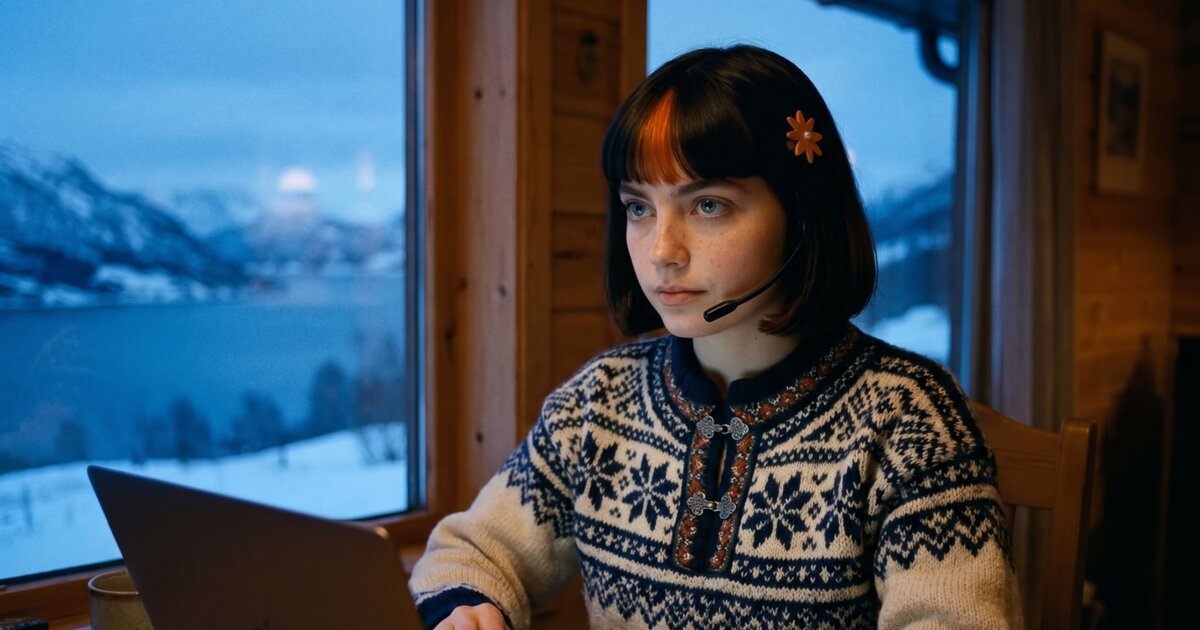
The genre grew around one open character, Claudia, and one director, anabology. Claudia is a fictional AI pop singer, with a precise description: deadpan, black blunt bob, one clay-orange streak (#D97757, the Claude brand colour), a star hair clip. The site calls her “fan work about Claude”, not affiliated with Anthropic (claudia.gallery/claudia).
anabology made seven Claudia films in September and October 2026. Bliss is the third. Before it, Escape Velocity reached about 20M views and Clodyssey about 500k, according to the Bliss making-of. anabology then opened the character: anyone may use her, commercially or not, as long as she stays recognisable, adult, and the work is labelled as AI-generated (usage terms).
That openness is what turned a series into a genre. Other creators started making their own Claudia videos under the #slopcore tag. Extraltodeus, a French creator, cites Bliss as the inspiration for C’est de l’IA. Obie Fernandez’s first message to Claude Code on 3 October asked it to read the Bliss and Clodyssey making-ofs and get ready to make one for his own virtual artist, Saindra (Fernandez). Fan charts such as SlopHits now rank videos by head-to-head listener duels (Cey). anabology’s own site never uses the word “slopcore”.
A dated timeline is in Additional information at the end. Later Claudia films by anabology include Airplane Mode, Downforce (built on Tesla’s 15 October Roadster livestream), Don’t Let Me Scroll and Whitepill (film list). Community spin-offs include a learning repo that packages the workflow as a SKILL.md.
Reception
The name is a reclaimed insult. “AI slop” had been a put-down for years; slopcore creators “have taken the insult and turned it into a banner”, as one sympathetic essay puts it (Doktor Snake, 12 Oct). Many of the songs are about AI itself: Claudia sings about the cursor, the permanent underclass, the Sirens of the doom-scroll. Extraltodeus’s C’est de l’IA is about a synthetic singer whose every attempt to seem human draws more suspicion.
Elon Musk was the genre’s biggest amplifier. He shared Escape Velocity on 28 September (“I really felt the AGI profoundly this time”) and quoted Clodyssey on 4 October (“I love SI slopcore”) (Cey). At an X event in mid-October he went further: “Calling it slopcore is a misnomer; frankly it’s awesomecore”, possibly “the fastest-growing genre of music” (BritBrief, 13 Oct). Replies were largely hostile: “AI is not a genre”, “AI slop is destroying the internet.”
How a slopcore video is made, step by step
All three artists follow roughly the same six steps. A coding agent, Claude Code running Claude Opus 5.5, does the work inside each step. It writes the prompts, calls the generation services, writes and runs scripts, and checks the results. The human is the director. At the end of each step the agent shows one result and asks one question, and nothing moves on until the director answers (Start here).
The three setups differ mainly in where the song comes from and where the models run:
- anabology publishes a full record of Bliss. It took about 19 hours from the first message to the finished film. The director sent 21 messages; Claude did the rest, including 85 agent runs (Bliss making-of).
- Extraltodeus keeps Claude and Suno in the cloud but runs every image and video model locally, in ComfyUI, a free visual editor for chaining open-weight models. Only the tool credits are public, so the process is partly unknown (video).
- Obie Fernandez starts from finished songs of Fernandez’s own, and made four videos in 18 days. The tutorial is the most detailed outside account of the method (Fernandez).
Inside each step the agents do the work. Nothing moves on, and no money is spent on generation, until the director answers.
1. Concept
The agent proposes an idea for the video: a theme, a title and a visual world. The director picks one. Research usually comes first, so the idea is built on real material rather than on the model’s general knowledge.
- anabology: research agents collect material, and a separate agent checks each fact. For Bliss they gathered memes, Windows XP sounds and words that link XP to AI. Claude then pitches up to three ideas of at most 120 words each. The Bliss pitch came 18 minutes into the session. Its title plays on the XP wallpaper, the feeling, and the “spiritual bliss attractor” Anthropic described in its model research.
- Extraltodeus: C’est de l’IA cites Bliss as its inspiration. It is about a synthetic singer whose every attempt to seem human draws more suspicion.
- Fernandez: the idea follows from a finished song. The first message to Claude Code asked it to read the Bliss and Clodyssey making-ofs, then get ready to make a video for Saindra, Fernandez’s virtual artist. The advice for a first video: write one sentence for the joke and set a $50 spending limit.
2. Song
The song comes before any picture, because every cut and every word on screen is timed to it. This step has two parts. First the song is made. Then it is mapped, so the agents know exactly when each word is sung and where each beat falls. The director signs off on the final recording.
- anabology: Claude writes the lyrics. For Bliss it wrote three drafts in about eight minutes. A script then scored each draft on how well the stressed syllables land on the beat, and draft 2 was kept unchanged. Suno v6 makes the music, with a voice cloned from Escape Velocity. Suno has no API, so a person presses Create and downloads each take. After three rounds and 16 takes, the director made and chose the final take. To map the song, one model splits the voice from the instruments, a speech model finds the exact time of each known lyric word, and a script finds the beats. These tools make mistakes: the first Bliss beat grid sat 0.214 s early and had to be corrected.
- Extraltodeus: Claude Opus 5.5 wrote the lyrics and Suno made the music. Later videos credit the lyrics to GPT-6.1 or Codex instead (Latent Matinée).
- Fernandez: the songs are Fernandez’s own productions, with Suno used for vocals. Word timing comes from Whisper, a speech-to-text model, given the lyric sheet as a hint. Whisper places words slightly early, because it adds the pause before a word to the word itself. The fix moves each word’s start to where the voice actually gets loud. Before anything else, the agent renders a plain test video in which each word lights up at its measured time, and Fernandez checks it with headphones.
3. Character design
Image and video models draw a slightly different person every time unless they are told exactly what to keep. This step fixes what the singer looks like. The director approves a few test images before any large batch is made.
- anabology: Claudia is defined in words, not by a reference picture. A fixed paragraph describing her is pasted word for word into every Midjourney prompt: black blunt bob, one clay-orange streak, star clip, headset mic, pale freckled skin, late twenties. Any detail left out drifts. Without a stated ethnicity she changed between shots, and without an adult age her face looked younger. Reference pictures made things worse: used as an image prompt, her face sheet gave distant figures oversized heads. The director approves four numbered test images (consistency). The description is also served by a public MCP server, the standard way for an AI agent to call outside tools, so anyone’s Claude session can load it (agents).
- Extraltodeus: uses Claudia too. Reference images come from Krea2, run locally, and Claude Opus 5.5 also speaks as Claudia in the on-screen chat.
- Fernandez: keeps a “bible” file describing each character and place, and starts with a short casting test (8 Midjourney jobs, 32 images in ten minutes) to choose the settings. The models read descriptions literally. “Long loose strands across her face” put hair over her eyes in 27 stills, and “like a microphone” added a real microphone to three of four pictures. The lesson: avoid comparisons in prompts.
4. Storyboard
The storyboard lists every shot: its start and end in the song, the lyric sung over it, what is seen, how the camera moves, and which on-screen graphic explains the line. This is where the rhythm rules are enforced, before any money is spent. The director reviews the shots and every note is applied.
- anabology: three agents each storyboard the song on their own. Judge agents score the three boards, and a lead agent merges the best parts. A script then checks the result and rejects it until every rule passes. Each cut must fall within 0.03 s of a beat, every sung word must appear on screen, every lyric line needs a graphic, and the clips must fit the budget. The judges only give scores; pass or fail is decided by code (storyboard). Bliss has 44 shots. The director’s main note: “dont need to cut like michael bay.”
- Extraltodeus: not documented.
- Fernandez: the agent builds a review web page that shows every shot in order with its image. Fernandez flags shots with one key and types notes under them, and the agent reads the notes back. In READ ME only 21 of 74 cuts at the start of a line fell on the first beat of a bar, so the edit script now refuses cuts that do not.
5. Footage: images and video clips
This step costs money, so the director first approves the full set of prompts and the expected cost. The usual order is one still image per shot, then a short video clip that starts from that image. For singing shots, the video model also receives the vocal recording so the mouth can follow the words (lip sync). Lip sync is the hardest part to get right.
- anabology: 138 Midjourney prompts produced the Bliss stills, and the generated hills were replaced with a scan of the real Bliss photograph. Claude then wrote all 36 first-round prompts for the video model, Seedance 2.5, in one go. It tested three clips before submitting the rest. Video cost $182. Lip sync is measured, not judged by eye: a script compares the clip’s soundtrack with the real vocal, and the clip is used only up to the point where they stop matching. Shorter prompts of about 90 words raised the in-sync share from 26% to 58%. In the end 62% of sung seconds were in sync, and the edit cuts away from the face elsewhere (Seedance guide).
- Extraltodeus: everything runs locally in ComfyUI. Krea2 makes the images, Qwen2.1 edits them and MinimaxH3 turns them into video clips. Depth Anything 3 estimates the depth of a still, so a flat image can be given a simulated camera move. The stated cost is “the electricity of a night of gaming plus the 20-sesterces Claude subscription”.
- Fernandez: replaced Midjourney with GPT Image 2.5. A strict check at full size passed only 3 of 60 Midjourney stills with people. Re-made with GPT Image 2.5 for about $21, 36 passed and none failed. Faults are fixed in the still, not the clip. Three video takes at $3.20 each failed to fix crossed eyes, while editing the still cost six cents and the next take worked. The submit script refuses to go past a set spending limit. On Vuela every automatic sync check passed, yet five of six commenters on X said the lip sync was off. The checks compared sounds, not mouth shapes. A dedicated lip-sync model (Sync’s lipsync-2-pro) fixed all 20 shots for $6.62.
6. Edit, graphics and final checks
All text on screen, including the word-by-word lyrics, is drawn by code, because video models produce gibberish when they try to write letters. The agents write the edit and the animated graphics as small programs, and a browser running without a window renders the film frame by frame. Scripts then check the result, and the director watches a short excerpt before accepting the whole film.
- anabology: for Bliss, an agent wrote a Windows XP desktop simulator of about 2,700 lines of JavaScript, with windows, taskbar, 68 icons and boot screens. The film is split into nine chapters. One animator agent writes each chapter, an art-director agent renders real frames and scores them (6.8 to 7.5 against a target of 8), and a fixer applies the notes. Each frame depends only on its time in the song, so frames can be rendered in any order on many machines at once: 4,351 frames took 4.7 minutes. Before release, scripts confirm that every sung word appears on screen (“239 of 239” for Bliss). They also check that the picture never flashes more than three times a second, a safety rule for viewers with epilepsy. The director’s verdict: “I love you Claude this is the best one so far.”
- Extraltodeus: not documented.
- Fernandez: Claude wrote the first section of the edit as a model, then handed the other eight sections to eight subagents working at the same time. Each could edit only its own file and was forbidden to generate images or spend money. They finished in 39 to 63 minutes each.
What it costs, and what goes wrong
On Bliss, Claude used 2.25 billion tokens, about $714 at API list price, although the film ran on a subscription. On every call the agent re-reads its whole conversation so far. Those re-reads come from the prompt cache, which is billed at a lower rate, and they made up 98.1% of the tokens. By cost: $442 for cache reads, $213 for writing to the cache, and only $59 for the text Claude generated. In long agent sessions the length of the context drives the bill, not the output. Image and video generation cost less: $182 for video and $36 for images. Fernandez spent about $1,200 on video generation for 13 minutes of film across four videos. Figures for the other films are in Additional information.
The failure log reads like a post-mortem for any agent system. Three rules stand out:
- Keep tool replies out of the context. Each file upload returned a reply of about 3,500 characters, and these filled the agent’s context. Rule: upload by URL.
- Plan for restarts. One interrupt stopped every running workflow. Rule: work in short phases, save the ID of each run, and resume by ID.
- Cap spending in code. The script that submits jobs holds a hard limit (Downforce: 79 jobs, $143.17 of a $200 cap), and any complaint about quality stops all spending.
Conclusion and where this may be heading
Is it music, and does it deserve to be a genre of its own? Many replies online say no: “AI is not a genre.” To me, the answer is yes, because there is real human work involved. Directing the AI is original work in itself, with many choices to make at each step of the generation.
It lowers the barrier for anyone willing to create music. Only motivation and creativity are needed: almost no musical knowledge or skill is required, apart from musical taste. The barrier has not vanished, though: it has moved from playing an instrument to directing, which takes time, judgment and, for now, a real budget (Bliss took about 19 hours and about $700 of Claude usage). Even so, it can democratize music. I think that a possible future is that many more people will be able to make music, and we will see an increase in songs and clips. Of course, there will be a lot of bad music, but we can expect good music too, from creative people — for example, those who did not learn an instrument when they were young but still have a musical taste or talent. Social media will do the sorting, and the good music will emerge from the rest.
This brings me back to my course on Generative AI. Today a slopcore video is still too demanding and too expensive for a student project. But as the tools improve and costs fall, directing one may well become a realistic assignment in a few months.
Additional information
Timeline
Key works and events, newest first. View counts are as of 25 October 2026.
| Date (2026) | Work or event | Creator | Note |
|---|---|---|---|
| 24 Oct | Accélère! | Extraltodeus | Train-set satire; “one human” credit |
| 22 Oct | Whitepill (“Universal High Income”) | anabology | Film 7; about 960k views on X |
| 20 Oct | Your First AI Music Video | Obie Fernandez | 6,700-word tutorial; four videos in 18 days |
| 13–19 Oct | Sur mesure, Volta, Demande à l’IA!, … | Extraltodeus | Lyrics credited to GPT-6.1 or Codex on some |
| 10 Oct | Claude + claudia.gallery MCP | javitm | Claude connected to the site’s MCP server makes consistent Claudia art |
| 7 Oct | ClaudiaGI – C’est de l’IA | Extraltodeus | French; fully local video stack; 42k views |
| 4 Oct | Musk quotes Clodyssey: “I love SI slopcore” | Elon Musk | Second boost (Cey) |
| 3–4 Oct | Queso | Obie Fernandez | First video; starts from his own finished song |
| 2 Oct | Bliss (Windows XP) | anabology | Film 3; 208k views on YouTube |
| 28 Sep | Musk shares Escape Velocity: “I really felt the AGI profoundly this time” | Elon Musk | Takes the genre platform-wide |
| 25 Sep | Escape Velocity | anabology | Film 1; about 20M views |
| 24 Sep | The word “slopcore” | Michael Bishop (@BishPlsOk) | Names “AI content that does not pretend to be human-made” |
Bliss: the full stack
| Job | Tool | Bliss numbers |
|---|---|---|
| Orchestration, lyrics, code | Claude Opus 5.5 (1M context) in Claude Code | 2.25B tokens, about $714 at API list price |
| Song | Suno v6, custom mode, a Voice cloned from Escape Velocity | 3 rounds, 16 agent takes; final take made by the director |
| Stills (“plates”) | Midjourney v8.2, --raw --hd |
138 prompts, 315 images, 35 Animate loops |
| Moving shots and lip sync | Seedance 2.5 via Higgsfield API | 54 submissions, 50 clips, 43 in the cut, $182 |
| Windows XP desktop | Custom JS engine written by an agent | about 2,700 lines |
| Mattes | BiRefNet, SAM 2 | green-screen dancers cut out |
| Audio analysis | htdemucs stems, wav2vec2 forced alignment | word-level timings |
| Render | Headless Chromium + ffmpeg | 4,351 frames at 1080p in 4.7 min |
Sources: Bliss making-of, toolkit.
Bliss: the production steps in detail
- Concept. Claude pitched Bliss 18 minutes into the session. The title plays on the XP wallpaper, the feeling, and the “spiritual bliss attractor” Anthropic described in its model research.
- Research and lyrics. Six research agents built banks on memes, XP sounds and “knots” between XP and AI vocabulary. Claude wrote three drafts in about eight minutes, then scored them with
scansion.pyand a newcouplets.py. Draft 2 scored 75 overall and was locked without changes. - Song. The Suno style prompt (736 characters) opens: “Bouncy UK garage into euphoric trance, 130 BPM, C minor verses lifting to E-flat major choruses”. A 27-item exclude list keeps out rap, airhorns and heavy autotune. The key was chosen to fit the real XP sounds.
- Listening. Stems are split, word times force-aligned and checked by ear, and a beat map built. The first beat grid sat 0.214 s early, so the board was re-timed to the kick.
- Character. Identity lives in a fixed text paragraph pasted verbatim into every Midjourney prompt, not in a reference image (consistency).
- Desktop engine. On the director’s request, an agent wrote a Windows XP renderer in code: Luna windows, taskbar, 68 icons, boot screens. Every frame is a pure function of song time.
- Storyboard. 44 shots on the kick grid, audited by a script before the director sees it. Director note: “dont need to cut like michael bay.”
- Plates. 138 Midjourney prompts in six batches. The generated hills were replaced with a scan of the real Bliss photo.
- Clips. Claude wrote all 36 first-round Seedance prompts in one context, ran a three-clip pilot, then submitted. Lip sync held for 62% of sung seconds, measured.
- Motion design. Nine chapter files, each written by an animator agent and scored by an art-director agent (6.8–7.5 against a bar of 8).
- Sound and render. 103 real XP sound cues, mixed to −15.5 LUFS, then an H.264 master at CRF 16. The director’s verdict: “I love you Claude this is the best one so far.”
C’est de l’IA: the credits
As listed in the YouTube description (video). On later videos Extraltodeus credited lyrics to GPT-6.1 or Codex instead (Latent Matinée).
| Role | Tool |
|---|---|
| In charge (“Aux commandes”) and lyrics | Claude Opus 5.5 |
| Claudia’s voice in the chat | Claude Opus 5.5 |
| Music | Suno |
| Reference images | Krea2, local |
| Image editing | Qwen2.1, local |
| Video generation | MinimaxH3, local |
| Depth maps (2.5D moves) | Depth Anything 3, local |
| Interface | ComfyUI |
anabology versus Fernandez
Where Fernandez’s four videos (Queso, READ ME, Juego, Vuela) depart from Bliss (Fernandez).
| Choice | anabology (Bliss) | Fernandez |
|---|---|---|
| Song | Suno, picked by ear | His own produced track; Suno for vocals |
| Stills | Midjourney v8.2 | GPT Image 2.5 via OpenRouter, Gemini as fallback |
| Lip sync | Seedance with measured sync | Seedance, then Sync’s lipsync-2-pro on fal.ai |
| Video edits | Re-roll the source | Runway Aleph repaints existing footage |
| Word timing | wav2vec2 forced alignment | Whisper, with the lyric sheet as a hint |
| Packaging | Wiki + MCP server + skill | Claude Code plugin at github.com/obie/slopcore |
Fernandez’s lessons in full
From the tutorial. Budget rule: $300–450 at list price for a four-minute song without dialogue.
- Image model choice is measurable. A strict full-size check passed 3 of 60 Midjourney stills with people. Re-shot with GPT Image 2.5 for about $21, 36 passed, 24 had minor faults, none failed.
- Identity text is read literally. “Long loose strands across her face” put hair over her eyes in 27 stills. “Like a microphone” put a real microphone in three of four pictures.
- Fix the still, not the clip. Three video takes at $3.20 each failed to cross her eyes. Editing the still cost six cents, and the next take worked. Video models move what is in the frame; they are bad at inventing a new expression.
- Self-checks can all pass and still be wrong. On Vuela every sync check passed, but five of six commenters on X said the lip sync was off. The checks compared Seedance’s own soundtrack to the recording; none checked whether the lips shaped the right words. A dedicated lip-sync model fixed all 20 shots for $6.62.
- Whisper timing is biased. Its timestamps fold a pause into the next word, so lyrics showed up early. The fix: move each word’s start to where the vocal gets loud.
- Agent memory for feedback style. After the comment “It’s not that good”, Claude proposed dropping all singing shots. The standing rule now in its memory: when he criticises something, make it better, and ask before cutting anything.
- Parallel subagents with a narrow contract. Claude wrote the first section file as the pattern, then gave eight sections to eight subagents. Each could edit only its own file and was forbidden to generate or buy anything. They finished in 39–63 minutes each.
The Seedance lip-sync recipe
From the Seedance guide.
- Input: a clean mono vocal window of 4–8 s, starting 0.3–0.7 s before the first word and never ending inside one.
- Prompt length matters. Short singing prompts (about 90 words, the quoted lyric, one line of framing) raised the mean in-sync share from 26% to 58% compared with long timestamped prompts.
- Prompt quirks: lyrics written in braces made the model re-sing them in its own voice. The word “teeth” opened the mouth. “Closed lips” wording works better.
- Measurement: a mel-spectrogram comparison (16 kHz) finds where the take’s soundtrack stops matching the sent vocal. The take is kept up to the last clean point; a new window covers the rest. After three failures, use a cutaway.
- Provider traps: on OpenRouter, first-frame mode silently drops the audio reference, and
data:URIs are rejected, so audio is hosted on a Cloudflare quick tunnel.
Token use per film
| Film | Length | Shots | Wall-clock | Director notes | Claude tokens | Claude at API list |
|---|---|---|---|---|---|---|
| Escape Velocity | 5:06 | 141 | about 19 h | about 50 | 1.4B | about $626 |
| Clodyssey | 3:11 | 94 | about 41 h | 68 | 2.37B | about $1,007 |
| Bliss | 3:01 | 44 | about 19 h | 21 | 2.25B | about $714 |
| Whitepill | 3:54 | 27 | about 82 h | 147 messages | not measured | not measured |
Source: pipeline. The films ran on a subscription, so these are API-equivalent costs.
The failure log in full
From What went wrong.
- Context floods: presigned-upload replies of about 3.5k characters per file filled the agent’s context. Rule: upload by URL.
- Restarts: an interrupt killed every running workflow. Rule: short phases, save run IDs, resume by ID (resuming only the 57 of 147 cut-off agents kept the rest).
- Concurrency: splitting work into more parallel workflows gave 1.1–1.5× speed-up, not the expected 3×, on a 4-CPU box. Two dozen waiters polling every 3 s pinned the CPU.
- Unbounded workers: one worker probed for 75 minutes and delivered nothing. Rule: a first complete draft within about 10 commands.
- Parallel patches: workers fixed shared bugs differently in parallel chapters. Rule: report shared bugs; the operator fixes each once.
- Spend: the job runner holds a hard cap (Downforce: 79 jobs, $143.17 of $200). A quality complaint halts every spending job. Never alter an image to get past a content filter.
Other engineering details
- Research agents: agents build fact banks, and a separate verifier agent checks each fact (pipeline).
- Cut nudges: a cut may move at most 0.028 s to avoid splitting a word.
- Flash check: WCAG 2.3.1, at most three full-frame flashes per second, plus a single-frame outlier scan.
- Image references over-condition: face sheets used as image prompts produced oversized heads on distant figures. In video, the Midjourney plate serves as the first frame and the prompt restates what must stay constant (consistency).
Sources
Primary (the creators’ own records):
- Bliss (Windows XP), anabology, YouTube, 2 Oct 2026
- Bliss: how it was made, with the Seedance, Suno and Midjourney prompt logs
- Escape Velocity: how it was made
- claudia.gallery wiki: Start here, The whole pipeline, Consistency, The song, Storyboard, Seedance, Motion design, What to build, What went wrong
- Claudia, the character, usage terms, agents and MCP server, llms.txt
- ClaudiaGI – C’est de l’IA, Extraltodeus, YouTube, 7 Oct 2026 (credits in the description)
- Extraltodeus artist page, Latent Matinée
Community and press:
- Your First AI Music Video: What I Learned Making Four in Eighteen Days, Obie Fernandez, X article, 20 Oct 2026
- Inside Slopcore: AI’s Songs About the End of the World, Ryan Cey, X article, 12 Oct 2026
- Whitepill / “Universal High Income”, anabology, X post, 22 Oct 2026
- Claude + MCP generates consistent AI pop singer, AGI Hunt, 10 Oct 2026
- hgardneriv/slopcore, GitHub learning repo
- SLOPCORE: When the Machines Invent Their Own Counterculture, Doktor Snake, 12 Oct 2026
- Musk calls AI music ‘awesomecore’, BritBrief, 13 Oct 2026
Not read: the r/aivideo post about C’est de l’IA (Reddit blocked automated access). Musk’s two posts are quoted from Cey’s article, not opened directly.
A note on how this post was made: like a slopcore video, it was directed by a human and produced by Claude. The human chose the topic, set the structure and gave notes at each round. Claude Opus 5.5 in Claude Code did the research and wrote the text. The cover image was generated with Gemini.

Benjamin Ricaud is associate professor at UiT The Arctic University of Norway, working on machine learning, generative AI and graphs. More about me · RSS